
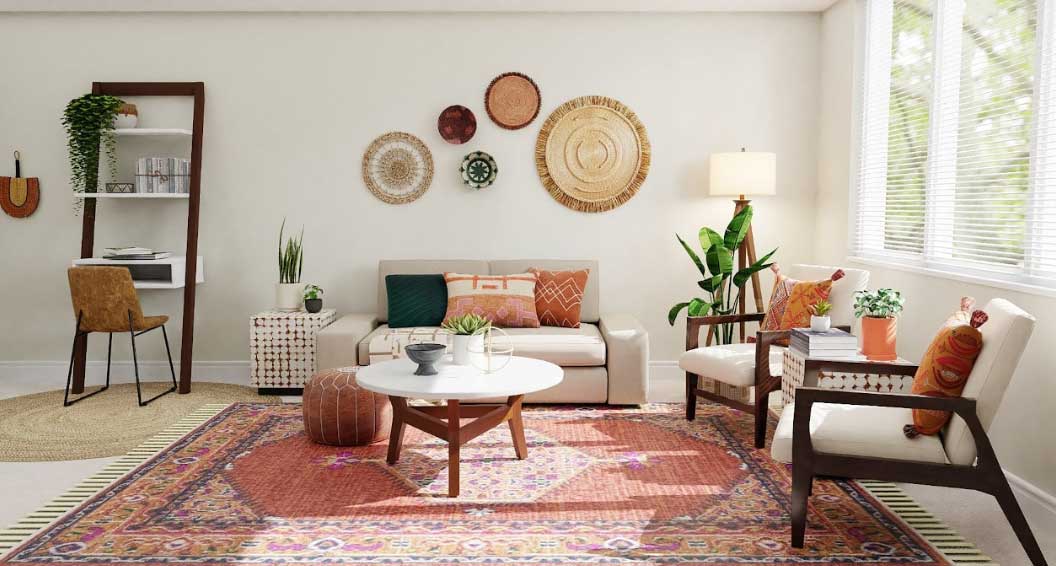
When people hear the words eco-friendly home décor, they often picture the same things: bamboo furniture, jute rugs, lots of indoor plants, unfinished wood, woven baskets, and a room filled with shades of beige and green.
There is nothing wrong with that style if you love it. But sustainable decorating doesn’t have to look a certain way.
You can have a modern living room, a minimalist bedroom, a colorful kitchen, or even a sophisticated contemporary home while making more thoughtful choices about the things you bring into it.
In fact, some of the most sustainable decorating choices aren’t immediately recognizable as “eco-friendly.” A vintage mirror, a secondhand side table, a well-made wool rug, a repaired cabinet, or a lamp you’ve kept for 15 years can all fit naturally into a stylish home.
The goal isn’t to make your home look environmentally conscious. The goal is to decorate in a way that uses fewer resources, avoids unnecessary replacement, values durability, and gives existing items a longer life.
Here are practical eco-friendly home décor ideas that can make your space feel beautiful and personal without making it look like an “eco showroom.”
What Actually Makes Home Décor Eco-Friendly?
Before getting into decorating ideas, it helps to look beyond the label.
A product being described as “green,” “natural,” or “eco-friendly” doesn’t automatically tell you how sustainable it is. The environmental impact of a piece of décor can depend on several things, including the materials used, manufacturing process, transportation, durability, maintenance requirements, and what happens to the item when you no longer need it.
For everyday decorating, think about five simple questions:
- Do I actually need it?
- Can I buy it secondhand?
- Will it last?
- Can it be repaired or reused?
- Do I understand what it is made from and where it comes from?
This way of thinking is often more useful than simply looking for an “eco” label.
1. Start With Secondhand Décor That Looks Expensive
One of the easiest ways to make your home more sustainable is also one of the simplest: don’t automatically buy everything new.
Secondhand shops, antique stores, estate sales, local marketplaces, charity shops, and online resale platforms can be surprisingly good sources of home décor.
Look for:
- Vintage mirrors
- Wooden side tables
- Old cabinets
- Dining chairs
- Decorative ceramics
- Picture frames
- Table lamps
- Vintage artwork
- Small stools
- Decorative boxes and trays
The best part is that secondhand pieces often have something that mass-produced décor can’t easily replicate: character.
A contemporary room with one unusual vintage mirror or an old wooden cabinet can feel much more personal than a room where every object came from the same furniture collection.
How to Make Secondhand Pieces Look Modern
You don’t need to create a vintage-looking home simply because you bought a vintage item.
Try combining one older piece with clean, contemporary furniture. For example, place an antique mirror above a simple modern console or put a vintage wooden stool beside a contemporary sofa.
The contrast is what makes the room interesting.
2. Use Reclaimed Wood Without Making Your Home Look Rustic
Reclaimed wood has become closely associated with farmhouse and rustic interiors, but it can work surprisingly well in modern spaces.
Instead of using heavily weathered timber throughout a room, use reclaimed wood selectively.
Consider:
- A simple reclaimed wood coffee table
- Floating shelves
- A wood-framed mirror
- A narrow console table
- A small bench
- A minimalist headboard
- A single feature shelf
Then balance the texture with smoother materials such as glass, metal, painted surfaces, or contemporary fabrics.
For example, a reclaimed timber coffee table can look surprisingly sophisticated when paired with a simple sofa, neutral rug, glass accessories, and modern lighting.
The key is using reclaimed wood as an accent rather than making every surface look rustic.
3. Choose Natural Materials in Small, Intentional Ways
Natural materials can give a home warmth and texture, but you don’t need to cover every room in woven materials to create an environmentally conscious interior.
Depending on your style, consider materials such as:
- Linen
- Wool
- Cotton
- Cork
- Rattan
- Bamboo
- Jute
- Seagrass
- Terracotta
Use them selectively.
A single woven pendant light can have more visual impact than ten baskets scattered around a room. A linen curtain can soften a modern bedroom without changing its entire aesthetic.
Think of natural materials as texture and contrast, not as a theme.
4. Stop Chasing Every Home Décor Trend
There is another sustainable decorating habit that doesn’t require buying a special “eco-friendly” product: buy less often.
Interior trends move quickly. A color, furniture shape, or decorative style can be everywhere one year and difficult to find the next.
If you redecorate every time your preferred style changes, perfectly usable furniture and accessories can quickly become unwanted.
A more sustainable approach is to build your home around pieces that you genuinely like.
When buying something new, ask yourself:
- Would I still like this if it stopped trending?
- Can I use it in another room later?
- Is it well made?
- Will I realistically keep it for several years?
A timeless piece doesn’t have to be boring. It simply needs to work beyond one decorating trend.
5. Turn Sustainable Wall Décor Into a Design Feature
Your walls are an excellent place to introduce sustainable decorating choices without changing the overall character of your home.
Try Vintage Artwork
Instead of buying mass-produced prints, explore secondhand artwork, old photographs, vintage posters, or artwork from local artists.
An imperfect old frame can also become part of the charm.
Use Reclaimed or Reused Frames
If you already have frames stored away, repaint or refinish them rather than buying new ones.
Try Textile Wall Art
Vintage textiles, woven pieces, handmade fabric art, or locally produced textile work can add texture without relying on conventional mass-produced wall décor.
And don’t overlook the simplest option: decorate with something you already own.
A collection of family photographs, old travel maps, children’s artwork, or inherited objects can make a home feel much more personal than generic wall art.
6. Choose Sustainable Lighting That Doesn’t Look “Eco”
Lighting is one of the easiest ways to change the personality of a room.
Fortunately, sustainable choices don’t have to look rustic.
Consider:
- Secondhand table lamps
- Vintage floor lamps
- Recycled glass lighting
- Paper shades
- Rattan pendant lights
- Durable metal fixtures
- Repairable or replaceable lighting components where available
Rather than asking whether a light fixture looks environmentally friendly, consider its quality, longevity, repairability, and whether you genuinely like it.
A beautiful lamp that remains in your home for years can make more sense than repeatedly replacing inexpensive decorative lighting because it has gone out of style.
7. Bring Nature Indoors Without Turning Your Home Into a Jungle
Plants are an obvious choice for a more nature-inspired interior, but more isn’t necessarily better.
One large plant in a beautiful pot can make a stronger visual statement than a dozen small plants placed around the room.
Try:
- A statement floor plant
- A small group of plants on one shelf
- A hanging plant in a suitable location
- A sculptural plant on a side table
- Plants displayed in reused or vintage containers
Choose plants that suit your actual light, temperature, and maintenance conditions. A plant that survives comfortably in your home is more practical than one purchased because it looked beautiful on Pinterest and then struggled in the wrong environment.
8. Make Sustainable Textiles Feel Luxurious
Textiles have a huge effect on how a room feels.
You don’t need to choose rough or visibly “natural-looking” fabrics to make better choices.
Depending on your needs and budget, explore:
- Linen curtains
- Organic or responsibly produced cotton textiles
- Wool rugs
- Vintage rugs
- Hemp fabrics
- Durable recycled-fiber textiles
- Secondhand cushions and throws
The trick is to focus on quality and longevity.
A well-made neutral throw that works with your furniture for years is more useful than buying several inexpensive cushions simply because their colors match the latest trend.
9. Decorate With Vintage Mirrors
If you want one sustainable décor idea that can dramatically change a room, look for a secondhand mirror.
Large mirrors can make smaller rooms feel more open, reflect natural light, and create a strong focal point.
You could choose:
- An oversized vintage mirror
- An antique-style framed mirror
- A simple wooden mirror
- A collection of smaller secondhand mirrors
- A mirror with an unusual frame
Don’t worry if the mirror isn’t perfectly contemporary. Sometimes that contrast is exactly what makes the room interesting.
10. Give Old Furniture a Second Life
Before replacing a piece of furniture, ask whether it actually needs to be replaced.
A tired cabinet might only need:
- A fresh finish
- New handles
- Minor repairs
- New hinges
- Reupholstery
- A different location
You can also change the purpose of a piece.
An old cabinet could become bathroom storage. A small wooden table could become a bedside table. An unused ladder could become a display shelf.
This approach keeps useful materials in circulation and can also result in furniture that feels more personal than something bought directly from a showroom.
11. Add Recycled Glass for a More Refined Look
If rustic décor isn’t your thing, recycled glass can be an easy way to introduce a more sustainable material while keeping the room sophisticated.
Consider:
- Glass vases
- Candle holders
- Decorative bowls
- Storage jars
- Lighting fixtures
- Small tabletop accessories
Clear, translucent, or softly colored glass works particularly well in modern and minimalist interiors because it doesn’t visually overwhelm the space.
12. Choose Rugs for Longevity, Not Just Appearance
A rug can completely change a room, but it is also something that should ideally stay with you for a long time.
When shopping for a rug, consider:
- How durable it is
- How easy it is to clean
- Whether the construction suits the room
- How often it will be used
- Whether you genuinely like the design
- Whether it can be repaired or maintained
Vintage rugs can be particularly interesting because they combine existing materials with a design that already has a history.
Natural-fiber and wool rugs can also be options worth exploring, depending on the room and your budget. But material alone shouldn’t determine whether a rug is a good environmental choice.
13. Make Your Kitchen Part of Your Sustainable Décor
Sustainable decorating doesn’t stop at the living room.
Your kitchen can be stylish and lower-waste without looking like a sustainability demonstration.
Try:
- Secondhand wooden stools
- Ceramic storage containers
- Recycled glass jars
- Linen kitchen towels
- Reclaimed wood shelving
- Vintage cutting boards used as display pieces
- Durable containers instead of disposable decorative storage
A useful object can also be a beautiful object.
Open shelving, for example, can display your favorite ceramics and glassware while reducing the need to buy separate decorative accessories.
14. Create a More Sustainable Bedroom
Your bedroom doesn’t need a complete makeover.
A few thoughtful changes can make a noticeable difference.
- Choose durable bedding.
- Look for linen or responsibly produced cotton textiles.
- Use a secondhand bedside table.
- Choose a vintage lamp.
- Add a secondhand mirror.
- Use a long-lasting rug.
- Repair furniture before replacing it.
Keep the color palette simple if that suits your style, then introduce personality through artwork, textiles, books, or one or two unusual pieces.
15. Sustainable Décor Can Work With Almost Any Interior Style
One misconception is that sustainable interiors have to look a particular way.
They don’t.
Modern
Use clean-lined furniture, recycled glass, vintage metal, simple reclaimed wood, and neutral textiles.
Scandinavian
Think light wood, wool, linen, simple ceramics, and functional furniture.
Boho
Vintage textiles, secondhand furniture, rattan, handmade ceramics, and collected objects work naturally here.
Minimalist
Focus on fewer pieces, durable materials, simple forms, and furniture that serves more than one purpose.
Japandi
Consider natural timber, handmade ceramics, linen, restrained colors, and carefully selected vintage pieces.
Industrial
Reclaimed wood, vintage lighting, recycled metal, and secondhand furniture can fit comfortably into this style.
The important thing is not to copy an “eco” aesthetic. It’s to find sustainable choices that already fit your aesthetic.
16. Start With Small Changes Instead of Redecorating Everything
You don’t need to replace your entire home to make it more sustainable.
Start with one room or even one category.
| Small Change | Potential Visual Impact |
|---|---|
| Vintage mirror | High |
| Secondhand lamp | High |
| Vintage rug | High |
| Linen curtains | High |
| Reclaimed wood shelf | Medium |
| Recycled glass vase | Medium |
| Secondhand artwork | High |
| Natural-fiber cushion | Medium |
Sometimes one carefully chosen piece can completely change a room.
17. Before Buying New Décor, Shop Your Own Home
This is probably the most overlooked sustainable decorating trick.
Before ordering something online, walk through your home and look at what you already have.
You might discover:
- A lamp stored in a cupboard
- Artwork that could work in another room
- A vase you’ve stopped noticing
- A chair that needs a new location
- Old frames that could be reused
- Books that could become part of a display
- A piece of furniture that only needs minor repair
Try rearranging before buying.
Move artwork. Change the position of furniture. Group similar objects together. Remove a few things rather than adding more.
You may be surprised by how different a room can feel without purchasing anything.
18. Be Careful With “Eco-Friendly” Marketing
The growing interest in sustainable living has also created an opportunity for vague environmental marketing.
A product described as “green,” “earth-friendly,” “natural,” or “eco-conscious” isn’t automatically a better environmental choice.
Instead of relying on a marketing phrase, look for specific information.
Ask:
- What material is actually being used?
- Where was it produced?
- Is there information about sourcing?
- How durable is it?
- Can it be repaired?
- What happens when it reaches the end of its useful life?
- Is the sustainability claim specific enough to verify?
Be especially cautious when a product makes broad environmental claims without explaining what those claims actually mean.
Sustainable shopping isn’t about finding a perfect product. It’s about making a more informed choice.
19. Don’t Buy Something Just Because It Looks Sustainable
This sounds obvious, but it is surprisingly easy to fall into.
A beautifully photographed basket, wooden tray, woven wall hanging, or ceramic vase may look perfect on Pinterest.
But if you already have three similar items at home, buying another one doesn’t become sustainable simply because it is made from a natural-looking material.
Before purchasing, ask:
“Would I still want this if it wasn’t marketed as eco-friendly?”
If the answer is yes and you have a genuine use for it, that’s a very different purchase from buying something simply because the word “sustainable” caught your attention.
20. The Most Sustainable Décor May Be the Décor You Already Own
There is an important idea behind all of this:
You don’t always need to buy something to make your home more sustainable.
Keeping furniture in use is valuable. Repairing it can be valuable. Passing it to someone else can be valuable. Buying secondhand can be valuable.
Even simply resisting the urge to replace something because it is no longer trending can be a meaningful change.
Sustainable decorating is not necessarily about having the most environmentally impressive home. It can be as simple as becoming more intentional about what enters your home and how long you keep it.
A Simple 5-Step Formula for Sustainable Home Décor
If all of these ideas feel like too much, remember five words:
1. Keep
Keep the things you genuinely love and use.
2. Repair
Fix furniture, lighting, textiles, and accessories when repair makes sense.
3. Reuse
Find another purpose or location for things you no longer use in their original form.
4. Buy Secondhand
Look for pre-owned furniture and décor before automatically buying new.
5. Buy New Carefully
When you genuinely need something new, pay attention to durability, materials, sourcing, repairability, and how long you expect to use it.
20 Eco-Friendly Home Décor Ideas at a Glance
- Choose vintage mirrors.
- Buy secondhand furniture.
- Use reclaimed wood selectively.
- Decorate with vintage artwork.
- Choose durable linen curtains.
- Consider wool or vintage rugs.
- Use recycled glass accessories.
- Repair old cabinets instead of replacing them.
- Repurpose furniture for new uses.
- Choose secondhand lighting.
- Use natural-fiber textiles where appropriate.
- Display handmade ceramics.
- Choose vintage baskets.
- Use reclaimed or reused picture frames.
- Decorate with meaningful personal objects.
- Choose furniture that can adapt to different rooms.
- Use plants that suit your actual home environment.
- Buy fewer decorative items but keep them longer.
- Shop your home before shopping online.
- Choose quality and longevity over short-lived trends.
Frequently Asked Questions
Is eco-friendly home décor expensive?
It can be, but it doesn’t have to be. Secondhand furniture, vintage décor, repairing existing items, and shopping your own home can all reduce the amount you spend. Sustainable decorating is not automatically about buying premium products.
How can I make my home more sustainable without changing its style?
Start with purchasing habits rather than aesthetics. Choose secondhand furniture, repair what you own, buy durable pieces, and research materials before purchasing new décor. You don’t need to change your color palette or interior design style.
What are some sustainable materials for home décor?
Depending on the product and how it is produced, materials such as reclaimed wood, recycled glass, wool, linen, cotton, cork, and natural fibers can be options worth considering. However, the material alone doesn’t tell the whole sustainability story. Durability, sourcing, production, transportation, and end-of-life considerations also matter.
Is secondhand furniture more sustainable?
Buying secondhand can help keep existing furniture in use and reduce the immediate demand for a new replacement. However, condition, transportation, durability, and how the furniture will actually be used are still worth considering.
How can I avoid greenwashing when buying home décor?
Look for specific, verifiable information rather than vague environmental language. Ask what the product is made from, where it was produced, how long it is expected to last, and whether the company provides meaningful information about its environmental claims.
Can a modern home have sustainable décor?
Absolutely. Sustainability isn’t an interior design style. Modern homes can incorporate vintage furniture, recycled materials, durable textiles, reclaimed wood, secondhand artwork, and long-lasting furniture without looking rustic or traditionally “eco.”
What is the most sustainable way to decorate a home?
There isn’t one perfect formula. A practical approach is to buy less, keep useful items longer, repair when possible, reuse what you already own, consider secondhand options, and make informed choices when purchasing new products.
How can I decorate sustainably on a budget?
Start with what you already own. Rearrange furniture, reuse décor in different rooms, repair damaged pieces, shop secondhand, and look for vintage items. These approaches can often cost less than buying a completely new décor collection.
Final Thoughts: Your Home Doesn’t Have to Look “Eco-Friendly”
Eco-friendly home décor doesn’t need a recognizable look.
Your home can be modern, colorful, minimalist, traditional, eclectic, industrial, or completely unique to you.
The more important question isn’t whether your home looks sustainable. It’s whether the things inside it are being chosen thoughtfully.
Keep what you love. Repair what you can. Give old furniture another chance. Look for secondhand pieces. Choose new products carefully. And don’t feel pressured to buy something simply because it has been labeled “eco-friendly.”
Sustainable decorating isn’t about creating a perfect home. It’s about creating a home you can enjoy for a long time without constantly needing to replace it.
And perhaps that’s the best part: your home doesn’t have to look “green” to be a little greener.