

Fragrance-free peptide eye cream, face moisturizer, and body lotion set to firm, smooth, and hydrate skin head to toe.
Making your home more eco-friendly sounds simple until you start looking at all the advice online.
One article tells you to install solar panels. Another recommends replacing plastic with bamboo. Someone else says you need a compost bin, reusable everything, energy-efficient appliances, natural cleaning products, organic bedding and a vegetable garden.
It can quickly feel like sustainable living means buying a completely new version of your home.
It doesn’t.
In my experience, a more sustainable home usually starts with something much less exciting: paying attention to what you already use and what you regularly waste.
Maybe the lights are left on in empty rooms. Maybe food gets forgotten at the back of the refrigerator. Maybe perfectly good furniture is replaced because it looks a little dated. Maybe the air conditioner is doing all the work while sunlight is heating the room through an open window.
Those are the kinds of things worth looking at first.
You don’t need to change everything at once, and you don’t need to spend a fortune. A few sensible changes, repeated consistently, can make your household more efficient and reduce unnecessary consumption.
Here are 25 practical ways to start.
Quick Tip
You don’t need to do everything at once. Pick three ideas from this guide and start there.
What Does an Eco-Friendly Home Actually Mean?
There isn’t a single definition of an eco-friendly home.
For most households, it simply means finding practical ways to use fewer resources, create less waste and make more thoughtful purchasing decisions.
That can include:
- Using electricity more efficiently
- Avoiding unnecessary water waste
- Reducing food waste
- Reusing things instead of immediately replacing them
- Repairing household items
- Buying fewer disposable products
- Choosing durable products when something needs replacing
- Managing recyclable and electronic waste properly
- Considering energy-efficient appliances
- Making better use of natural light and ventilation
It is worth remembering that sustainable living isn’t a competition.
Your home doesn’t need to look like a magazine spread filled with bamboo, glass jars and indoor plants.
A household that simply buys less, wastes less food and keeps its appliances and furniture working for longer can be making some very sensible choices.
And sometimes the most environmentally responsible purchase is not making a purchase at all.
25 Ways to Make Your Home More Eco-Friendly
1. Start With the Lights You Use Every Day
Lighting is an easy place to start because you don’t have to completely change your routine.
If you still have older incandescent bulbs, replacing them with LED bulbs when they need replacing can reduce electricity use for lighting. LEDs also generally last much longer than traditional incandescent bulbs.
You don’t have to walk around your house replacing every bulb tomorrow.
Start with the lights that are used most often:
- Kitchen lights
- Living room lights
- Outdoor lights
- Home office lights
- Frequently used bedrooms or hallways
There is another option that costs nothing at all: use daylight when you can.
Open the curtains. Clean the windows. Move furniture if it is blocking useful natural light.
It sounds obvious, but once you get into the habit, you’ll notice how often lights are switched on simply because that’s what you’ve always done.
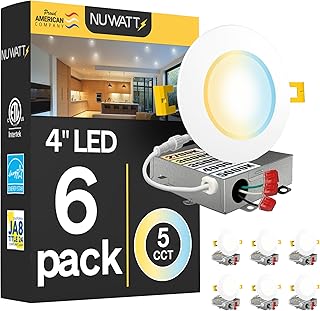
45 Year Lifespan, 630 LM, Wet & IC Rated, Airtight, 27K/30K/35K/40K/50K, 9W, 120V, Canless 4″ Wafer LED Lights, Energy Star
2. Don’t Let Electronics Quietly Use Electricity
Most of us have a small collection of electronic devices that are plugged in all the time.
The television sits on standby. Chargers remain connected. The printer hasn’t been used for weeks, but it is still plugged in.
The amount of energy used by individual devices in standby can vary considerably, so it’s not worth becoming obsessed with unplugging every appliance in your home.
Instead, look for the easy wins.
If a home-office setup isn’t being used overnight, for example, a switched power strip can make it easy to turn several devices off at once.
The same idea can work for entertainment equipment.
The goal is simple:
Don’t spend electricity on equipment that doesn’t need to be running.
3. Get More From Your Air Conditioner or Fan
In warm climates, cooling can make a noticeable difference to household electricity consumption.
Before turning the air conditioner down even further, look at what’s happening in the room.
Is direct sunlight coming through the windows?
Are doors being left open while the air conditioner is running?
Are the filters overdue for cleaning?
Could a ceiling fan or cross-breeze make the room comfortable without relying entirely on air conditioning?
Curtains, blinds, ventilation and insulation can all affect how quickly a room heats up or cools down.
The right combination depends on your climate and your house. What works in a humid tropical home won’t necessarily be appropriate for a cold-weather home.
That’s why it’s better to think in terms of reducing unnecessary cooling or heating, rather than following a universal temperature rule.

2026 upgraded air circulator fan for whole room powered by DREO’s advanced airflow tech circulates air up to 90 ft away and 1000 CFM to circulate all the air in your bedroom, living room, or kitchen in under 2 min.
4. Fix That Leaking Tap You’ve Been Ignoring
A dripping tap is easy to ignore because each individual drop seems insignificant.
But if a tap or toilet is continuously leaking, you’re wasting treated water for no useful reason.
Walk around your home and check:
- Kitchen taps
- Bathroom taps
- Shower fittings
- Toilets
- Outdoor taps
- Exposed plumbing
Some toilet leaks are particularly difficult to notice because water can slowly move into the bowl without making much noise.
If you find a leak, fixing it is often a much more sensible environmental improvement than buying another “eco-friendly” household product.
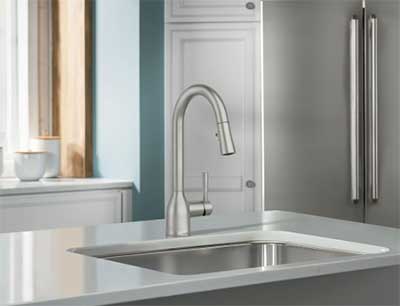
The Kitchen sink faucets are equipped with the Reflex system for smooth operation and secure docking of the pull-down spray head.
5. Use Less Water Without Making Life Difficult
You don’t need to stop enjoying long showers or start timing every trip to the sink with a stopwatch.
Start with the obvious waste.
Turn the tap off while brushing your teeth. Don’t leave water running while doing a task that doesn’t require it. Avoid running a washing machine for a tiny load when waiting for a fuller load is practical.
When replacing a showerhead or faucet, you can also look for water-efficient models.
The important distinction is that you don’t need to replace a perfectly good fixture simply because a newer one has a sustainability label.
Replace when replacement makes sense. Then choose the more efficient option.
6. Look at What’s Being Thrown Away in Your Kitchen
Spend five minutes looking through your kitchen bin.
What is actually in there?
Food scraps? Packaging? Paper towels? Plastic bags? Disposable containers?
This little exercise can tell you more about your household’s waste than a generic sustainability checklist.
If you notice that you throw away lots of disposable food bags, perhaps reusable containers would help.
If food makes up a large part of the bin, better meal planning may have a bigger impact than buying new kitchen products.
If packaging dominates, look for products with less unnecessary packaging when you next shop.
Start with the waste you actually produce.
That’s much more useful than trying to copy someone else’s zero-waste routine.
7. Stop Treating the Refrigerator Like a Waiting Room for Forgotten Food
We’ve all done it.
Something gets pushed behind another container, forgotten for a week and eventually discovered when it is no longer appealing.
Food waste is not just about throwing away food. The resources used to produce, transport, store and prepare that food have also been used.
A few habits can help:
Check Before Shopping
Look in the refrigerator and pantry before writing your shopping list.
Keep Older Food Visible
Move food that needs to be eaten soon toward the front.
Freeze What You Won’t Use
Many foods can be frozen before they deteriorate.
Get Creative With Leftovers
Yesterday’s vegetables might become today’s soup, curry, omelette or fried rice.
Don’t Buy Simply Because Something Is on Special
A bargain isn’t a bargain if half of it ends up in the bin.
8. Use Reusable Containers You Already Own
Reusable food storage is useful, but there’s a trap here.
Sustainability can become another excuse for shopping.
You don’t need a cupboard full of matching glass containers just because they look great in a Pinterest photograph.
If you already have suitable containers, use them.
Old jars can be useful for storing certain dry foods. Durable takeaway containers can sometimes be reused for appropriate purposes. Existing lunch boxes can continue doing their job.
When something eventually needs replacing, then consider a durable reusable option.
This approach avoids one of the stranger habits of modern “eco living”: throwing away usable things in order to buy greener-looking replacements.
9. Reduce Single-Use Products Gradually
Look at the disposable products you use most often.
- Plastic food bags
- Disposable cups
- Paper towels
- Plastic wrap
- Disposable cutlery
- Single-use shopping bags
You don’t have to eliminate all of them overnight.
Choose one or two that are easy to replace.
For example, washable cloths can handle many jobs that would otherwise require disposable wipes or paper towels.
The important thing is that the reusable alternative actually gets used repeatedly.
A reusable product sitting unused in a cupboard isn’t doing much good.
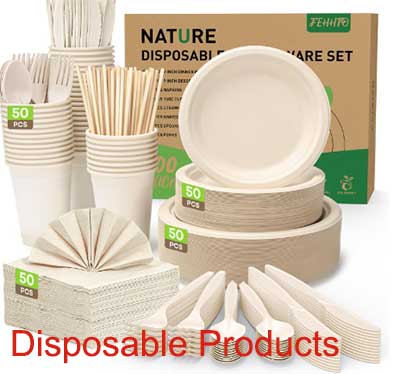
Disposable Paper Plates Set, Compostable Eco-friendly Dinnerware Set, Biodegradable Heavy-Duty Paper Plates, Utensils, Cups, Napkins, etc….
10. Make Your Cleaning Routine Simpler
Cleaning products can become surprisingly complicated.
One bottle for the kitchen. Another for glass. Another for the bathroom. Another for the floor. Then disinfectant, wipes, sprays and specialty products.
Some households can simplify this considerably.
Where appropriate, look for products that can handle multiple cleaning tasks, refill systems or concentrated formulas.
But don’t assume that a refill pouch is automatically more environmentally friendly than a conventional bottle. Packaging is only one part of the picture.
Look at the product as a whole, including how much product you need, how it is transported and how the packaging is disposed of.
11. Wash Your Cleaning Cloths Instead of Throwing Them Away
You don’t need disposable wipes for every small cleaning job.
Washable cloths can be useful for:
- Kitchen surfaces
- Dusting
- Mirrors
- Furniture
- General household cleaning
Old cotton clothing and towels can sometimes be cut into useful cleaning cloths once they are no longer suitable for their original purpose.
This is one of those changes that doesn’t feel particularly glamorous.
That’s exactly why it works.
You’re simply getting another use out of something you already own.
12. Be Careful With “Natural” and “Green” Marketing
This is one of the most important habits to develop if you want to shop more sustainably.
A product can be described as:
- Natural
- Green
- Eco-friendly
- Planet-friendly
- Sustainable
- Earth-friendly
Those words alone don’t tell you very much.
Instead, look for specific information.
What materials are used?
How long is the product expected to last?
Is the packaging recyclable where you live?
Can the item be repaired?
Does the manufacturer explain its environmental claims?
Are there recognized standards or certifications relevant to the claim?
The more specific the information, the easier it is to judge the product for yourself.
Don’t let a green label do all the thinking for you.
13. Buy Furniture With the Long Term in Mind
Furniture isn’t something you should have to replace every few years.
When buying a new table, chair, wardrobe or sofa, think beyond how it looks in the showroom.
Ask:
- Is it well made?
- Can parts be repaired?
- Is it likely to last?
- Can it be refinished?
- Will I still want it in a few years?
- Could I buy something second-hand instead?
A slightly more expensive piece that remains useful for many years can be a more sensible purchase than something cheap that quickly ends up being discarded.
14. Give Second-Hand Furniture a Chance
Not everything in your home needs to be new.
Second-hand furniture can be particularly interesting because small imperfections don’t necessarily matter.
A scratched wooden table might need only sanding and refinishing. An old chair might need new upholstery. A dated cabinet might simply need a coat of paint.
Check local second-hand stores, community marketplaces and resale groups.
You may also find older furniture that was designed to be repaired rather than replaced.
And there is another advantage:
You get to avoid buying something new when a perfectly usable item already exists.
15. Repair Before You Replace
A loose handle doesn’t necessarily mean you need a new cabinet.
A damaged chair doesn’t automatically belong in the garbage.
A torn piece of clothing may be repairable.
Before replacing something, pause for a moment.
Can this be repaired?
If you can’t repair it yourself, see whether a local repair service can.
Repairing isn’t always cheaper than replacing something, particularly for inexpensive mass-produced goods. But cost isn’t the only consideration.
Keeping a product in use for longer means getting more value from the materials and resources that went into making it.
16. Make “Buy Less” Part of Your Sustainability Strategy
This might be the least exciting sustainability tip on Pinterest.
It’s also one of the most useful.
Before buying something for your home, ask:
Do I need it?
Then ask:
Do I already own something that can do the same job?
A new storage basket might look useful, but perhaps you already have a box.
A new decorative item might look beautiful, but perhaps the room doesn’t actually need it.
A new kitchen gadget might promise convenience, but perhaps it will spend most of its life in a drawer.
Sustainable living doesn’t always involve finding a better product.
Sometimes it involves deciding not to buy another product.
17. Follow the Simple Waste Hierarchy
When you’re trying to reduce waste, it’s tempting to focus immediately on recycling.
Recycling is useful, but it isn’t the first step.
A simpler way to think about household consumption is:
Refuse → Reduce → Reuse → Repair → Recycle
Refuse
Don’t accept things you don’t need.
Reduce
Buy and consume less where practical.
Reuse
Use products repeatedly.
Repair
Keep things working for longer.
Recycle
Recycle materials when they are no longer suitable for reuse or repair and an appropriate recycling system exists.
This doesn’t mean recycling is unimportant.
It means recycling shouldn’t become an excuse to consume without thinking.
18. Deal With Electronic Waste Properly
Old electronics shouldn’t automatically go into your regular household garbage.
Think about:
- Phones
- Computers
- Batteries
- Chargers
- Printers
- Small appliances
- Cables
- Electronic accessories
First ask whether the item can still be used.
Could it be sold, donated, repaired or passed to someone who needs it?
If it is genuinely at the end of its useful life, look for an appropriate e-waste or battery collection option available in your area.
Electronic products contain materials that should be handled through appropriate waste channels rather than simply mixed with ordinary household rubbish.
19. Grow Something You Can Actually Eat
You don’t need a large garden to grow food.
Try something simple.
Depending on your climate and available space, you might grow:
- Mint
- Basil
- Chillies
- Green onions
- Curry leaves
- Tomatoes
- Leafy greens
A balcony, windowsill or a few containers can be enough for some plants.
There’s also something satisfying about growing even a small amount of food yourself.
It changes the way you look at food.
A handful of herbs suddenly feels less disposable when you’ve spent weeks growing them.
20. Make Your Garden Work With Your Climate
If you have outdoor space, choose plants that are suited to your local conditions.
Plants that naturally cope with your climate can often be easier to maintain than species that require constant watering or special care.
You can also:
- Compost suitable garden waste
- Reuse containers
- Improve soil with organic matter
- Avoid unnecessary watering
- Collect rainwater where appropriate and safe
- Choose plants based on available sunlight
There is no universal “eco-friendly garden.”
A sensible garden is one that works with the conditions you actually have.
21. Wash Clothes More Thoughtfully
Laundry is another area where small changes can become routine.
Where suitable for the fabric and hygiene requirements:
- Avoid running half-empty loads unnecessarily
- Use cooler washing cycles when appropriate
- Follow detergent instructions rather than automatically using more
- Air-dry clothes when practical
- Maintain the washing machine properly
When you eventually replace an old washing machine, compare energy and water efficiency as well as purchase price.
An appliance is something you’ll use repeatedly, so operating costs deserve attention.
22. Choose Efficient Appliances When You Need to Replace One
You don’t need to replace working appliances simply because a newer model is more efficient.
When an appliance genuinely needs replacing, however, efficiency should be one of the factors you consider.
Look at:
- Energy consumption
- Water consumption
- Expected lifespan
- Repair options
- Warranty
- Replacement parts
- Purchase price
- Local servicing availability
The cheapest appliance isn’t necessarily the cheapest one to own.
Likewise, the most expensive appliance isn’t automatically the most sustainable.
Look at the whole ownership period.
23. Consider Solar Power Carefully
Solar energy can be a useful option for some homes, but it isn’t a universal solution.
Before making a major investment, consider:
- Your electricity consumption
- Roof condition
- Available sunlight
- Installation costs
- System size
- Maintenance
- Expected lifespan
- Local electricity arrangements
- Available financing or incentives
If you’re considering solar, get information from qualified local installers and compare the actual numbers for your home.
Don’t make a major purchase simply because solar panels are fashionable on sustainability blogs.
Understand your household’s needs first.
24. Improve Your Home Before Buying More Technology
It’s easy to assume that every sustainability problem needs a smart device.
Sometimes it doesn’t.
If a room becomes extremely hot in the afternoon, the solution might not be another gadget.
It could be:
- Better curtains
- Shading
- Improved ventilation
- Sealing gaps
- Insulation
- Rearranging furniture
- Changing how the room is used
The same principle applies throughout the house.
Before buying technology to solve a problem, ask whether the underlying problem can be addressed more simply.
25. Start With the Three Changes That Make Sense for Your Home
After reading 25 ideas, it’s tempting to make a huge list and try to change everything.
Don’t.
Instead, walk through your home and look for three things.
One Thing You Waste
Perhaps it’s food, water, electricity or packaging.
One Thing You Buy Too Often
Maybe it’s disposable cleaning products, bottled drinks or inexpensive décor.
One Thing You Could Keep for Longer
Perhaps it’s furniture, clothing, electronics or household equipment.
Those three observations give you a much more useful starting point than a generic sustainability challenge.
What Can You Do If You Have Almost No Budget?
Sustainable living is sometimes presented as an expensive lifestyle.
It doesn’t have to be.
Here are some changes that cost little or nothing:
Free
- Turn off unnecessary lights
- Use daylight
- Reduce food waste
- Reuse containers
- Repair items
- Air-dry clothes
- Reduce unnecessary water use
- Unplug equipment that isn’t needed
- Shop your own cupboards before shopping for more
Low Cost
- LED bulbs
- Reusable cleaning cloths
- Faucet aerators
- Reusable shopping bags
- Simple storage containers
- Basic composting equipment
Larger Investments
- Efficient appliances
- Insulation
- Solar power
- Efficient windows
- Water-efficient fixtures
There’s no reason to start with the expensive category.
Start with the changes that are easiest for your household to maintain.
Make Your Home Eco-Friendly Room by Room
If you’re not sure where to begin, use this as a starting point.
| Room | What to Look For |
|---|---|
| Kitchen | Food waste, disposable products and inefficient appliances |
| Bathroom | Leaks, excessive water use and disposable products |
| Bedroom | Lighting, cooling and unnecessary purchases |
| Living Room | Electronics, standby power and lighting |
| Laundry | Washing loads, water use and drying habits |
| Garden/Balcony | Watering, suitable plants and garden waste |
| Home Office | Computers, printers, chargers and standby power |
You don’t have to fix every issue.
Pick one room, make one improvement and move on.
A 30-Day Eco-Friendly Home Challenge
If you like having a structured goal, try this.
Week 1: Energy
- Day 1: Check the bulbs you use most.
- Day 2: Look for unnecessary standby power.
- Day 3: Make better use of daylight.
- Day 4: Check your cooling habits.
- Day 5: Clean or maintain appropriate appliances.
- Day 6: Air-dry clothes if practical.
- Day 7: Review what changed.
Week 2: Waste
Look at your household bin.
Identify your three most common types of waste and choose one way to reduce each.
Week 3: Water
Check for leaks, reduce unnecessary running water and look at how your washing and cleaning routines use water.
Week 4: Shopping
Before buying a household product, use the five-question test:
- Do I need it?
- Do I already own something that can do the job?
- How long will it last?
- Can it be repaired?
- What happens to it when I’m finished?
By the end of the month, you won’t have a perfect sustainable home.
That’s not the point.
You’ll simply understand your household a little better.
Common Mistakes to Avoid
Replacing Everything at Once
Getting rid of usable products just because a new alternative is marketed as sustainable can create unnecessary waste.
Buying Too Many Reusable Products
You don’t need six reusable bottles and three different sets of food containers.
Buy what you’ll actually use.
Assuming “Natural” Means Environmentally Friendly
A natural ingredient doesn’t automatically tell you about the product’s complete environmental impact.
Thinking Expensive Means Sustainable
Price is not a measure of environmental performance.
Focusing Entirely on Recycling
Reducing consumption and extending product life should also be part of the conversation.
Trying to Become Perfectly Sustainable
Perfection makes sustainable living harder to maintain.
A few habits you keep for years are more useful than an ambitious lifestyle change that lasts two weeks.
Eco-Friendly Home Checklist
☐ Switch frequently used bulbs to LED
☐ Use natural daylight
☐ Reduce unnecessary standby power
☐ Improve cooling and ventilation habits
☐ Fix leaking taps and toilets
☐ Reduce unnecessary water use
☐ Reduce single-use products
☐ Use reusable food storage
☐ Reduce food waste
☐ Compost where appropriate
☐ Simplify your cleaning routine
☐ Reuse cleaning cloths
☐ Check environmental claims before buying
☐ Buy durable furniture
☐ Consider second-hand furniture
☐ Repair before replacing
☐ Reduce unnecessary packaging
☐ Recycle appropriately
☐ Dispose of e-waste responsibly
☐ Grow herbs or food at home
☐ Choose plants suited to your climate
☐ Buy only what you need
☐ Consider appliance efficiency when replacing old equipment
☐ Consider renewable energy where practical
☐ Start with one change today
Frequently Asked Questions
What is the easiest way to make a home more eco-friendly?
Start with the things your household already wastes. Reduce unnecessary electricity and water use, prevent food waste, reuse products and repair things before replacing them.
How can I make my home eco-friendly on a budget?
Start with free changes such as using natural light, reducing food waste, reusing items, air-drying clothes and avoiding unnecessary purchases. You can gradually introduce low-cost improvements such as LED bulbs and water-efficient fixtures.
Do I need to replace plastic products with bamboo or glass?
No. If your existing products are safe and usable, you don’t necessarily need to replace them. When they eventually need replacing, consider durability, reuse, maintenance and end-of-life disposal when choosing the next product.
Are eco-friendly products always better?
No. Environmental impact depends on more than a product’s marketing description. Consider materials, manufacturing, packaging, transportation, durability, use and disposal.
What is the most important eco-friendly change I can make?
There isn’t one answer for every household. Look at where your home uses the most energy, water and materials or produces the most waste. That will tell you where your efforts are likely to be most relevant.
How can I make my kitchen more sustainable?
Start with food waste. Plan meals, store food properly, use leftovers and freeze food where appropriate. Then look at disposable products, packaging and appliance efficiency.
Is buying second-hand better than buying new?
Second-hand products can extend the useful life of items and avoid the need for a new product, although the environmental impact varies by product and circumstances. For many household items, it’s a sensible option worth considering.
Can an eco-friendly home still be comfortable?
Absolutely. Sustainable living isn’t about making your home uncomfortable. It is about using resources thoughtfully. Natural ventilation, appropriate shading, efficient appliances and good maintenance can often improve comfort while reducing unnecessary resource use.
The Best Place to Start Is Your Own Home
There’s a lot of pressure online to make sustainable living look complicated.
You might see beautifully styled kitchens with matching glass containers, perfectly organized pantries, solar panels, indoor gardens and shelves full of products you’ve never heard of.
That’s fine for inspiration.
But real homes are messier.
People have old furniture. They have plastic containers they’ve owned for years. They forget food at the back of the refrigerator. They sometimes leave the lights on. They buy things they don’t really need.
That’s normal.
Making your home more eco-friendly isn’t about pretending those things never happen.
It’s about noticing them and gradually changing the habits that make the biggest difference for your household.
So don’t start by asking:
“What eco-friendly products should I buy?”
Start with:
“What am I wasting?”
Then ask:
“What can I use for longer?”
And finally:
“What don’t I need to buy at all?”
Those questions can take you surprisingly far.
You don’t need a perfect home. You just need to make the next decision a little more thoughtful than the last one.