
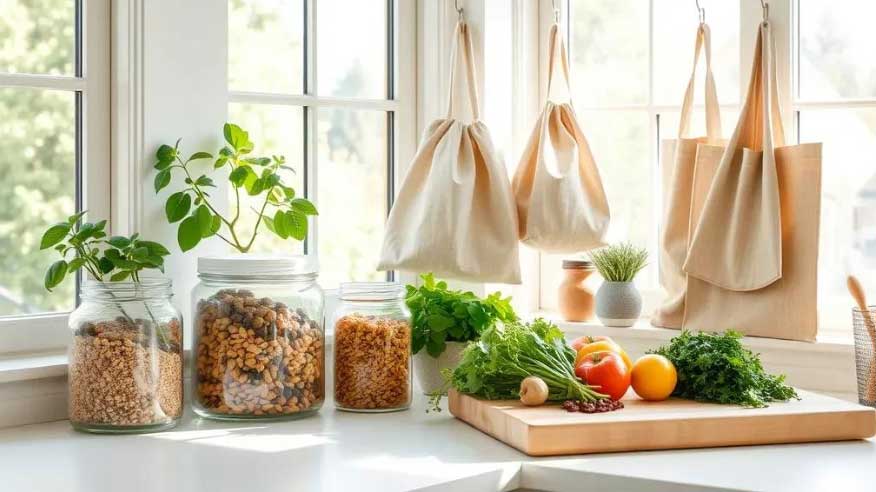
Take a look at your kitchen bin at the end of the day. You might find vegetable peelings, food packaging, a used paper towel, an empty drink bottle, or leftovers that nobody got around to eating. None of these things seems particularly significant on its own. Yet many of them are the result of habits we repeat without thinking.
The interesting part is that some household waste has very little to do with what we actually need. We buy ingredients before checking the fridge, accept disposable bags when we already have plenty at home, or replace everyday items that could have lasted a little longer.
Changing these habits doesn’t require a complete lifestyle makeover. You don’t need to buy matching glass jars, replace every plastic container, or spend a fortune on products marketed as sustainable.
In fact, one of the simplest ways to reduce household waste is to make better use of the things you already own.
This guide looks at 10 common household waste items, why they end up in the bin, and what you can realistically do to avoid them. Some changes may also help you spend less on groceries and everyday supplies, although the savings will depend on your household and shopping habits.
The aim isn’t to create a perfectly waste-free home. It’s to make your everyday routines a little less wasteful, one practical change at a time.
1. Food Waste: The Groceries You Buy but Never Eat
Food waste often starts long before anything reaches the bin.
Perhaps you bought fresh vegetables for a recipe you never made. Maybe there are two containers of leftovers in the fridge, but you can’t remember when you prepared them. Or you bought a large pack of fruit because it was on sale, only to find some of it spoiled before anyone could finish it.
These situations are familiar in many households, and they don’t necessarily mean someone is careless. Busy schedules, changing plans, poor storage, and buying more than the household needs can all contribute.
The good news is that food waste is often something you can address without buying anything new.
A few habits that make a difference
- Check the fridge before shopping. A quick look through your fridge and pantry can prevent duplicate purchases and help you plan meals around ingredients that need using.
- Buy for your actual routine. If you cook at home three evenings a week, buying ingredients for seven elaborate dinners probably isn’t practical. Plan around the meals you are genuinely likely to prepare.
- Make leftovers visible. Put them in clean, suitable containers and place older items where you will notice them. Labelling containers with the preparation date can also help you keep track.
- Freeze food when appropriate. Bread, cooked meals, and many other foods can be frozen safely when handled and stored correctly. Follow food-safety guidance for freezing, thawing, and reheating.
- Learn how your food should be stored. Some produce lasts longer in the refrigerator, while other items are better kept in a cool, dry place. Appropriate storage can help prevent premature spoilage.
It’s also worth understanding food date labels. Their meaning varies by country and product, so follow the instructions on the packaging and local food-safety guidance. Don’t rely on smell or appearance alone to determine whether potentially unsafe food is suitable to eat.
What about food scraps?
Not every scrap can be avoided. Banana peels, eggshells, and certain vegetable trimmings are normal parts of food preparation.
Depending on the ingredient and your cooking habits, some trimmings may be suitable for stock or other recipes. Suitable scraps can also be composted where an appropriate system is available.
The priority, however, is to avoid wasting edible food in the first place.
Try this: Before your next grocery shop, identify three ingredients that need using and plan a meal around them.
For further guidance, the U.S. Environmental Protection Agency’s sustainable food management resources offer useful information about preventing food waste.
2. Plastic Shopping Bags That Keep Piling Up
If you have a drawer full of shopping bags, you probably don’t need another one.
Disposable bags are easy to collect because they’re often offered when we shop. A few trips to the supermarket, pharmacy, or convenience store can leave you with more bags than you know what to do with.
Reusable bags are a practical alternative, but buying a new collection of them isn’t necessarily the best first step. The bags you already own may be perfectly suitable.
Make your existing bags easier to remember
Keep a few bags near the front door, beside your everyday handbag, or in your vehicle if you drive to the shops. Choose a place that fits your routine rather than relying on memory every time you leave home.
After unpacking groceries, return the bags to that spot immediately. It is a small habit, but it removes the need to search for them before the next shopping trip.
A compact foldable bag can also be useful for unexpected purchases. If you already have one, keep it somewhere accessible.
Are reusable bags always the better choice?
Not automatically. Reusable bags have their own environmental footprint because they require materials and manufacturing. Their benefits depend partly on how often they are used, how long they last, and what they replace.
That doesn’t mean you should avoid reusable bags. It means that using a sturdy bag repeatedly is generally a more sensible approach than continually buying replacements for the sake of having an eco-friendly collection.
You can also continue using suitable shopping bags you already own until they wear out.
Try this: Put two bags next to your keys or everyday bag tonight. The next shopping trip becomes much easier to prepare for.
3. Disposable Water Bottles and Takeaway Cups
Buying a bottle of water or a takeaway coffee may seem like a small convenience. When it becomes a daily habit, though, the number of containers you discard can add up.
This is one of the easier areas to reconsider, provided you have access to safe drinking water and a convenient way to clean your reusable bottle.
Choose a bottle that fits your day
You don’t need a premium insulated bottle with several accessories. A clean, food-safe refillable bottle that suits your routine is often enough.
If you spend most of the day at a desk, a simple bottle may work perfectly well. If you travel frequently or spend hours outdoors, you might prefer something more durable or better insulated.
The important thing is that you will actually carry it.
Wash the bottle regularly according to the manufacturer’s instructions, and allow it to dry properly. Refill it only from a source where the water is known to be safe to drink.
What about takeaway coffee?
If you regularly buy coffee on your commute, check whether your usual café accepts reusable cups. Some businesses do, while others have restrictions for hygiene or operational reasons.
If you only buy takeaway drinks occasionally, changing this habit may not be your highest priority. Start with the disposable items you use most frequently.
Also, don’t throw away a perfectly functional bottle or cup simply because a different material is currently popular. Using an item you already own is often the most practical place to begin.
Try this: Fill your reusable bottle before bed and put it beside your bag. You are more likely to remember it when it is ready to go.
4. Paper Towels and Disposable Cleaning Wipes
Paper towels are useful. They are also easy to reach for, even when a washable cloth would do the job just as well.
Think about how often you use one to wipe a kitchen counter, clean a small spill, or remove dust from a shelf. Some of these tasks can be handled with a reusable alternative instead.
Give old textiles a second job
Before buying a pack of specially marketed reusable cleaning cloths, look at what you already have.
An old cotton T-shirt or worn towel can often be cut into smaller cleaning rags. Keep them in a basket or drawer near the areas where you clean most frequently.
Use separate cloths for different tasks. For example, keep kitchen cloths apart from those used for bathroom cleaning or other potentially contaminated surfaces.
Reusable cloths also need proper care. Wash them regularly, dry them thoroughly, and follow appropriate hygiene practices, especially when cleaning up after raw meat or other food-safety hazards.
When should you still use paper towels?
There are jobs where a disposable product may be the more suitable option. Cleaning up certain contaminants or dealing with particularly messy tasks may call for a different approach.
Reducing waste doesn’t mean refusing to use disposable products under all circumstances. It means avoiding them when a practical, hygienic alternative is available.
Try this: Put three clean, washable cloths within easy reach of your kitchen sink. See how often you can use them instead of reaching for paper towels.
5. Food Packaging You Don’t Really Need
Food packaging has a purpose. It can protect products from contamination, help preserve freshness, and make transporting groceries easier. In some situations, appropriate packaging may even help prevent food waste.
Still, the way we shop can create unnecessary packaging, particularly when we buy many individually wrapped items or purchase more than we can use.
The solution isn’t to eliminate every wrapper. It is to make sensible choices where alternatives are available.
Start with your regular shopping list
If you frequently buy fruit and vegetables, check whether your local shop offers loose produce. You may be able to choose the quantity you need without taking home additional packaging.
For pantry staples, compare available sizes and consider how quickly your household uses them. A larger pack isn’t necessarily better if part of it will go stale or expire before you finish it.
Refill stations can also be useful for certain dry goods or household products. Check that the shop follows appropriate hygiene practices and that the refill option suits the product.
Reuse containers you already have
Clean jars and suitable food containers can help organise dry ingredients, store opened products, or keep pantry shelves tidy.
There is no need to buy a matching collection. Different containers can work perfectly well as long as they are clean, safe for their intended use, and stored appropriately.
It’s also worth remembering that not all packaging can be recycled in the same way. Materials, food contamination, and local recycling facilities affect what can actually be processed.
Try this: Choose one grocery item you buy every week and see whether a practical, less-packaged option is available. If the alternative costs significantly more or leads to spoilage, it may not be the right choice for your household.
6. Disposable Takeaway Containers and Cutlery
Food delivery and takeaway meals can create a surprising amount of rubbish. A single order might arrive with several containers, lids, sauce packets, napkins, and disposable utensils.
For people who order food frequently, this can be an easy area to review. For others, it may be less important than food waste or another recurring problem.
Reduce the extras first
You don’t have to stop ordering takeaway to reduce packaging waste.
When ordering, check whether you can decline disposable cutlery, straws, or other extras you won’t use. Some ordering platforms and restaurants offer this option.
If you regularly buy lunch near work, carrying a suitable reusable container may be helpful in places where businesses permit customers to use their own containers. Check the business’s policy before relying on this approach.
Reusable utensils can also be useful for people who frequently eat away from home.
Choose practical containers
A container you already own may work for packed lunches, snacks, or other suitable food-storage needs. Glass, stainless steel, and reusable plastic each have different benefits, so choose according to your routine, budget, and cleaning requirements.
Food containers must be suitable for their intended use. Follow the manufacturer’s instructions for heating, storing, and cleaning them.
And don’t assume that a disposable takeaway container belongs in the recycling bin just because it has a recycling symbol. Check the material and your local collection rules.
Try this: If you normally buy lunch five days a week, pack lunch once this week in a container you already own. Start with a manageable change rather than trying to overhaul your routine.
7. Half-Used Cleaning Products Under the Sink
A cupboard full of cleaning products can be a sign that you have more than you need.
Perhaps you bought a specialist spray for one cleaning task and never used it again. Maybe you purchased a replacement before checking whether the original bottle was nearly full. Over time, these products can become clutter that is eventually discarded.
Use what you have before buying more
Start by taking stock of your existing supplies. Group similar products together and check their labels, condition, and storage instructions.
You may discover that several products serve similar purposes. If so, you can decide which ones are appropriate for your regular cleaning tasks and avoid unnecessary duplicates.
Use the recommended amount of each product. More detergent or cleaner doesn’t necessarily mean better results, and following the label instructions can help prevent unnecessary use.
Store chemicals in their original labelled containers, away from children and pets. Follow the manufacturer’s instructions for safe storage and disposal.
Should you switch to refillable cleaning products?
Refillable systems can be useful when they are compatible with the product and are available through a reliable supplier. However, you don’t need to buy new bottles simply to make your cupboard look more sustainable.
Never mix cleaning chemicals, particularly bleach with ammonia or acidic cleaners, because dangerous gases can form.
If you have products you no longer need, check local disposal guidance before getting rid of them. Certain household chemicals require special handling.
Try this: Before buying your next cleaning product, check whether you already have something suitable for the task.
8. Disposable Bathroom Products and Personal-Care Packaging
The bathroom is another place where small disposable items can accumulate. Cotton rounds, empty product containers, single-use grooming accessories, and half-finished toiletries all contribute to household waste.
Some items have straightforward alternatives. Others are more difficult to replace without compromising hygiene or convenience.
Identify what you actually throw away
If you regularly use disposable cotton rounds for skincare, washable rounds or a suitable face cloth may be an option. They will need regular washing, and they may not suit every skincare routine.
If you tend to purchase several similar shampoos, moisturisers, or other toiletries at once, try finishing the products you already have before buying replacements.
When a product is nearly empty, check whether its packaging is accepted by your local recycling service. Cosmetic packaging can be difficult to recycle because it may combine different materials or contain small components that collection systems cannot process.
Don’t replace everything at once
It’s easy to turn sustainable living into another shopping habit. You see a set of reusable bathroom accessories, decide your existing products aren’t good enough, and end up buying more than you need.
A more practical approach is to make one change when a genuine need arises.
Some disposable hygiene and medical products also have important uses. They should not be replaced with reusable alternatives unless those alternatives are suitable for the specific task.
Try this: Notice which bathroom products regularly end up in your bin. Choose one item that has a safe, practical alternative and start there.
9. Clothing, Old Towels, and Household Items Thrown Away Too Soon
A shirt with a loose button, a towel that has become worn, or a small household item with a minor fault doesn’t always need to be thrown away.
Sometimes replacement is necessary. But in other cases, the item still has plenty of useful life left.
Keeping things in use for longer can be a sensible way to reduce unnecessary purchases and disposal.
Repair before replacing
Small repairs can extend the life of many everyday items. Sewing on a button, fixing a loose seam, or tightening a fitting may take only a few minutes.
If you don’t have the skills or tools for a particular repair, consider whether a repair service is available and whether the cost is reasonable compared with replacing the item.
Find another use for suitable textiles
Old cotton clothing and worn towels can sometimes be turned into cleaning rags. Clean, usable textiles may also be donated or passed on to someone who needs them.
If an item is no longer suitable for its original purpose, consider whether it can serve another one safely.
For example, a clean old T-shirt might work as a dusting cloth. However, heavily contaminated, mouldy, or unsuitable fabrics should not be repurposed for tasks where they could create hygiene risks.
What if the item cannot be reused?
Look for appropriate textile collection schemes or specialist recycling options where available. Donation centres don’t all accept damaged clothing, so check their requirements before dropping items off.
Electrical equipment, batteries, and damaged safety products may also require specific disposal arrangements.
Try this: Before discarding one household item, ask whether it can be repaired, cleaned, repurposed, donated, or safely recycled.
10. Paper Waste, Junk Mail, and Unnecessary Printing
Paper is easy to overlook because it seems ordinary. Yet printed documents, unwanted promotional mail, discarded notes, and paper packaging all contribute to the waste generated at home.
Reducing paper use can be relatively straightforward, especially when you focus on tasks that don’t actually require a physical copy.
Make small changes to your paper habits
- Use digital documents where appropriate. Electronic bills, statements, and receipts may reduce paper use if you can access and store them securely.
- Print only what you need. Some documents are easier to read or sign on paper. When printing is necessary, consider using both sides of a sheet and avoiding unnecessary duplicate copies.
- Reuse paper for everyday notes. A clean blank side can be useful for shopping lists, rough calculations, or drawing.
- Reduce unwanted mail. Depending on your location, you may be able to adjust marketing preferences or contact senders to reduce promotional correspondence.
- Recycle accepted paper and cardboard. Keep recyclable materials clean and dry, and check local rules. Food-soiled or greasy paper may not be suitable for ordinary paper recycling.
Is going paperless always better?
Not in every situation. Digital devices, data storage, and online services also use resources. Electronic records can be convenient, but important documents still need to be stored securely and remain accessible.
The aim is to avoid unnecessary printing and disposal rather than eliminating paper completely.
Try this: Before printing your next document, ask whether you need a paper copy. If you do, see whether double-sided printing is suitable.
A Quick Guide to Reducing These 10 Types of Household Waste
Use this table as a starting point when deciding which habits to change first.
| Household Waste | A Practical Alternative |
|---|---|
| Spoiled food and forgotten leftovers | Meal planning, appropriate storage, and freezing suitable portions |
| Disposable shopping bags | Reusing durable bags you already own |
| Bottled drinks and takeaway cups | A refillable bottle or reusable cup where practical |
| Paper towels and cleaning wipes | Washable cloths for suitable tasks |
| Excess food packaging | Buying appropriate quantities and choosing less packaging where possible |
| Takeaway containers and cutlery | Declining unnecessary extras and using suitable reusable items |
| Unused cleaning products | Checking existing supplies before purchasing replacements |
| Disposable bathroom products | Washable alternatives where appropriate for hygiene |
| Old clothing and household textiles | Repairing, repurposing, donating, or using suitable recycling schemes |
| Paper waste and junk mail | Digital documents where appropriate, paper reuse, and recycling |
Not every alternative will work for every household. What matters is choosing changes that reduce avoidable waste without creating a different problem.
How to Reduce Household Waste Without Spending More
One reason people hesitate to adopt sustainable habits is the impression that everything requires a special product. Social media can make it seem as though a lower-waste home needs matching storage jars, bamboo accessories, refillable dispensers, and a completely new cleaning kit.
In reality, you can make useful changes without buying any of those things.
Start by shopping your own cupboards
Before purchasing reusable bags, containers, or cleaning cloths, check what you already have.
A suitable glass jar can store pantry ingredients. An old cotton towel can become a cleaning cloth. A sturdy bag can be used repeatedly for groceries.
The best alternative is often something that already serves the purpose.
Avoid replacing functional items unnecessarily
A reusable product still requires materials, manufacturing, transport, and cleaning. Its overall environmental impact depends on several factors, including how long it lasts and how often it is used.
Replacing a perfectly functional item just to obtain a newer, supposedly greener version may not be the most sensible choice.
Use what you own until it needs replacing, then consider a suitable alternative when the time comes.
Change one habit at a time
If you try to change your shopping, cooking, cleaning, and personal-care routines all at once, the process can become frustrating.
Choose one recurring problem first. For example, if you frequently throw away vegetables, focus on meal planning. If your rubbish contains many disposable bags, work on remembering to carry the ones you already own.
Once the change becomes part of your routine, choose another.
Track what actually goes into your bin
You don’t need a complicated waste audit. Simply notice what you throw away over a few days.
You may find that food waste is your biggest concern, or that packaging from takeaway meals is more common than you expected. That information helps you spend your time on the changes most relevant to your home.
The goal is not to count every item forever. It’s to understand your habits well enough to make better decisions.
A Simple 7-Day Household Waste Challenge
If you prefer a clear starting point, use this one-week plan. Each day focuses on a small action rather than a complete lifestyle change.
- Day 1: Look at your household rubbish. Notice which items appear most frequently. Don’t judge yourself; simply identify a few patterns.
- Day 2: Use ingredients you already have. Make one meal around food in your fridge or pantry before buying more.
- Day 3: Prepare your shopping bags. Put the bags you already own somewhere you will remember to take them.
- Day 4: Try washable cleaning cloths. Use them for suitable everyday tasks instead of automatically reaching for paper towels.
- Day 5: Check your cleaning cupboard. Organise existing supplies and make a note of what you genuinely need to replace.
- Day 6: Give one item another chance. Repair, repurpose, donate, or pass on something that is still suitable for use.
- Day 7: Choose two habits to continue. Pick the changes that were easiest to maintain and build them into your normal routine.
At the end of the week, consider what worked and what didn’t. Perhaps you remembered your shopping bags but found that another change didn’t fit your schedule. That’s useful information, not a failure.
You can adapt the challenge to your circumstances and repeat it whenever you want to review your household habits.
Common Mistakes to Avoid When Reducing Household Waste
Trying to be more sustainable is worthwhile, but a few common mistakes can make the process unnecessarily expensive or complicated.
Buying too many reusable products
You don’t need to purchase a reusable alternative for every disposable item immediately. Start with what you already own and buy something new only when there is a genuine need.
Throwing away useful things to replace them
A functional container, shopping bag, or cleaning tool doesn’t automatically need replacing because another material is being promoted as greener. Extending the useful life of existing items is often a sensible first step.
Buying more food because the packaging seems better
Bulk buying can make sense for products you use regularly and can store properly. It can also lead to waste if the quantity is too large for your household. Consider how much you will actually use.
Assuming everything is recyclable
Recycling rules differ between locations. Some items accepted in one area may be rejected elsewhere, and certain materials require specialist collection. Check local guidance instead of relying on a recycling symbol alone.
Ignoring hygiene and safety
Reusable bottles, food containers, and cleaning cloths need appropriate cleaning. Similarly, household chemicals must be handled and disposed of according to their labels and local requirements.
Trying to eliminate every disposable item
Some disposable products have legitimate hygiene, medical, or safety uses. Reducing unnecessary waste does not require avoiding every single-use item regardless of circumstances.
A practical approach considers environmental impact alongside cost, convenience, safety, and the needs of the people living in the home.
Frequently Asked Questions
What are the most common household waste items?
Common examples include food scraps and spoiled groceries, shopping bags, disposable drink containers, paper towels, food packaging, takeaway containers, unused cleaning products, bathroom packaging, discarded textiles, and unnecessary paper. The exact mix varies with household size, lifestyle, shopping habits, and local waste services.
How can I reduce household waste without spending money?
Start by using what you already own. Plan meals around existing ingredients, carry your current shopping bags, reuse suitable containers, turn clean old cotton textiles into cleaning rags, repair belongings where practical, and avoid buying duplicate products. These steps can reduce waste without requiring a collection of new eco-friendly accessories.
What is the easiest way to start a low-waste lifestyle?
Choose one waste source that appears regularly in your bin and focus on changing that habit. For some households, this means planning meals more carefully. For others, it might mean carrying reusable shopping bags or reducing disposable cleaning products. A manageable change is easier to maintain than an ambitious plan that doesn’t fit your routine.
How can I reduce plastic waste in my kitchen?
Reuse shopping bags, choose loose produce when practical, carry a refillable bottle, and store food in suitable containers you already own. You can also reduce unnecessary takeaway packaging and purchase quantities you can use before they spoil. Keep food safety and freshness in mind when deciding whether packaging can be avoided.
Is reusing better than recycling?
Reusing a suitable item extends its useful life and may avoid the need for a replacement. Recycling can recover materials from products that are no longer useful, but its effectiveness depends on the material and local facilities. Whenever possible, consider whether an item can be used safely again before deciding how to dispose of it.
Are reusable products always more environmentally friendly?
No. Their environmental impact depends on how they are manufactured, how long they last, how frequently they are used, how they are cleaned, and what they replace. A durable reusable item used regularly may be a practical alternative, but buying unnecessary products can undermine the purpose of reducing waste.
How can renters reduce household waste without making permanent changes?
Renters can reduce food waste, carry reusable bags, use refillable bottles, organise existing containers, repair suitable belongings, and sort recyclables according to local rules. A small waste-sorting area can work without permanent fixtures. Composting and recycling options depend on the building and available local services.
What should I do with items that cannot be reused or recycled?
Check local disposal guidance and look for specialist collection services where necessary. Batteries, electronics, and certain household chemicals may require separate handling. Avoid putting hazardous materials into ordinary rubbish or drains when local guidance specifies a safer disposal method.
Final Thoughts
Reducing household waste is less about buying the right products and more about paying attention to the habits that create unnecessary rubbish.
A forgotten container of leftovers, another shopping bag, or a paper towel used for a task that didn’t require one may seem unimportant. But these everyday decisions offer practical opportunities to use resources more thoughtfully.
You don’t have to tackle all ten items at once. Start with the one you notice most often in your own household. Use what you already have, make a change that fits your routine, and see whether it helps.
Some ideas will work better for you than others. That’s normal. The aim is to find a few realistic habits that you can maintain without adding unnecessary expense or inconvenience.
Your first step can be as simple as checking the fridge before shopping or putting a reusable bag beside the front door. Choose one small change today, then build on it when you’re ready.
Save this guide on Pinterest if you’d like to revisit the ideas and choose another household waste habit to work on later.
Further Reading and Reliable Resources
For readers who want to explore household waste reduction further, these resources provide practical information from recognised organisations.
- U.S. Environmental Protection Agency: Sustainable Management of Food — information about preventing food waste and managing food resources.
- U.S. Environmental Protection Agency: Recycling — guidance on recycling and reducing waste.
Recycling, composting, and waste collection options vary by location. Check the requirements of your local waste management authority before disposing of materials.