
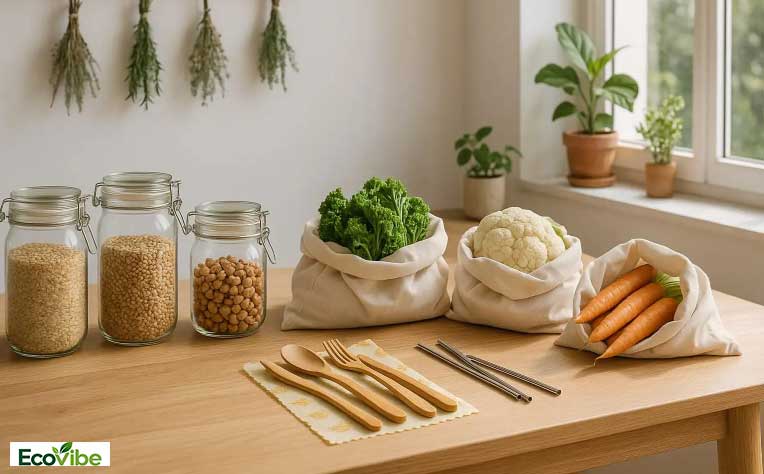
Have you ever emptied your shopping bags, put everything away, and noticed how much plastic came with your groceries? There might be a bag around the vegetables, a wrapper around the bread, a plastic tray under the meat, and several packets that will end up in the bin before the week is over.
Then there is the plastic wrap used to cover leftovers, the bags used for snacks, and the cleaning products lined up beside the kitchen sink. Individually, these things do not seem like much. Over time, though, they can add up.
The good news is that reducing kitchen plastic does not mean giving up convenience or spending a fortune on eco-friendly products. Often, the easiest changes involve using what you already have a little differently.
A bowl covered with a plate can replace cling film. An old glass jar can store rice or lentils. A shopping bag kept near the front door is more useful than an expensive reusable bag that you keep forgetting to take with you.
In this guide, we will look at 15 practical ways to reduce plastic waste in your kitchen, including alternatives worth considering, ways to keep costs down, and a simple seven-day plan to help you get started.
Why Does the Kitchen Produce So Much Plastic Waste?
The kitchen is one of the places where disposable packaging becomes part of everyday life. Food needs to be transported, protected and stored, so plastic often appears in the products we buy.
Some of it is difficult to avoid completely. Other items are used for only a few minutes before being thrown away.
Common examples include:
- Plastic bags used for groceries and fresh produce.
- Food wrappers, trays and snack packets.
- Cling film and disposable food storage bags.
- Bottles and containers for cleaning products.
- Disposable cups, plates and takeaway cutlery.
- Packaging around bread, meat, cheese and other foods.
- Worn-out sponges and short-lived cleaning accessories.
Not all plastic packaging is unnecessary. In some cases, it protects food from contamination or helps it last longer. Removing that packaging without considering food safety or food waste is not always a better choice.
A sensible starting point is to look for the plastic you can avoid without making everyday tasks harder. Use fewer disposable items where practical, reuse suitable products, and recycle materials that your local collection service accepts.
You do not need a perfectly plastic-free kitchen to make progress.
15 Practical Ways to Reduce Plastic Waste in Your Kitchen
1. Use Reusable Containers Instead of Disposable Food Bags
Disposable food bags are handy for sandwiches, chopped vegetables, snacks and leftovers. The problem is that many are used once and discarded.
Reusable containers can handle many of the same jobs. Glass containers work well for leftovers and pantry ingredients, while stainless steel containers are useful for packed lunches and dry snacks. If you already have food-safe plastic containers in good condition, you can continue using them for their intended purposes.
Before buying anything new, open your kitchen cupboards and see what is available. You might find containers that have been sitting unused for months. Choose a few that fit your everyday needs and keep them somewhere easy to reach.
A few practical habits can help:
- Use lidded containers for leftovers.
- Keep smaller containers for snacks and chopped ingredients.
- Choose stackable options if cupboard space is limited.
- Wash reusable containers properly and allow them to dry before storing.
There is no need to buy a matching set of containers just because it looks good in a Pinterest photograph. A mixture of suitable containers can work perfectly well.
A simple place to start: Use a container you already own the next time you would normally reach for a disposable food bag.
2. Stop Reaching for Cling Film Automatically
Cling film is useful for covering bowls and wrapping food, but it is not always necessary.
If you have ever wrapped a bowl in plastic film only to throw the film away a few hours later, you may already have a simpler option in your cupboard.
Try these alternatives:
- A plate over a bowl: Useful for covering many bowls in the refrigerator.
- A container with a lid: A convenient option for leftovers and prepared ingredients.
- Reusable silicone covers: Helpful when the cover fits the bowl or container properly.
- Reusable food wraps: Suitable for certain foods and containers, depending on the product.
Each option has its place. A plate may be all you need for a bowl of leftovers, while a secure container is more practical for transporting food.
Be careful with reusable wraps made from beeswax or similar materials. Follow the manufacturer’s cleaning and temperature instructions. Beeswax wraps generally are not suitable for raw meat or fish, microwaves, or hot foods.
You do not need to buy a special product to stop using cling film for every task. Try the alternatives you already have first.
3. Keep Reusable Shopping Bags Where You Will Remember Them
Reusable shopping bags sound like an obvious solution, but there is one small problem: they are not much help when you leave them at home.
The trick is to make them part of your normal routine.
Keep a few bags near the front door, in your everyday bag, or in the car if you have one. After unpacking your groceries, put them back in the same place rather than leaving them scattered around the house.
Washable produce bags can also be useful for loose fruit and vegetables. However, you do not necessarily need a separate bag for every item. Some produce can be placed directly in your shopping basket, depending on the store’s arrangements.
If you frequently shop on the way home from work, a small foldable bag may be easier to carry than a large reusable tote.
One other point worth remembering: reusable bags need to be used repeatedly to make sense. There is little benefit in collecting more bags than you need.
4. Replace Worn-Out Plastic Cooking Utensils With Durable Alternatives
Plastic cooking spoons, spatulas and turners can wear out, especially when they are exposed to high heat or frequent use.
When it is time to replace one, consider a wooden or stainless steel alternative, or a suitable silicone utensil designed for your cooking needs.
Wooden spoons are useful for many everyday cooking tasks. Stainless steel tools can last a long time, although they are not suitable for every pan or cooking surface. Silicone utensils may be convenient when you need a flexible tool that can tolerate the temperatures specified by the manufacturer.
The right choice depends on what you cook, the equipment you use, and how much maintenance you are willing to do.
Wooden utensils should be cleaned and dried properly. Silicone products should be used within their stated temperature limits, and damaged utensils should be replaced when they can no longer be cleaned or used safely.
There is no need to throw away every plastic utensil in your drawer. If it is still suitable for its intended use, keep using it until replacement makes sense.
5. Consider a Wooden Cutting Board When Your Current One Needs Replacing
A wooden cutting board can be a long-lasting alternative to a plastic board. It also offers a different feel when chopping vegetables, fruit and other ingredients.
If you are considering making the switch, think about the board’s size, the type of wood, the maintenance required and the space available in your kitchen.
Wood needs a little care. Clean the board after use, dry it thoroughly, and avoid leaving it soaking in water. Follow the manufacturer’s maintenance advice to help prevent cracking or warping.
Food safety matters whichever material you choose. Use separate boards for raw meat and ready-to-eat foods, or clean and sanitize them appropriately between uses. Replace a board when deep damage or wear makes it difficult to clean safely.
A wooden board is not automatically the best choice for every household. It may require more maintenance than some alternatives, and it can be heavier or more expensive.
The practical approach: Keep your existing board if it is in good condition. Consider a wooden one when you genuinely need a replacement.
6. Reuse Glass Jars for Pantry Storage
You do not need a perfectly organized pantry filled with matching containers to store food neatly.
Clean glass jars from products you already buy can be useful for storing dry ingredients such as rice, lentils, beans, oats, pasta and spices.
Before reusing a jar, wash it thoroughly and let it dry completely. Check that the glass and lid are in good condition. Avoid using jars with cracks, chipped edges or lids that no longer close properly.
Clear jars can also help you see what you have at a glance. That is useful when you are planning meals or checking whether you need to buy more of an ingredient.
If your local shops offer refill stations or bulk foods, you may be able to use suitable containers or reusable bags, subject to the shop’s policies.
It is worth comparing prices, though. Buying larger quantities does not always save money if some of the food ends up unused.
Start with the ingredients you buy most often. Three or four well-used jars are more useful than a shelf full of containers you rarely touch.
7. Plan Your Meals to Avoid Unnecessary Food and Packaging Waste
Reducing plastic waste is not only about finding alternatives to packaging. It is also about buying food thoughtfully and making sure it gets used.
Think about the last time you found forgotten vegetables at the back of the refrigerator or discovered that an ingredient had expired before you opened it. A little planning can help prevent that.
Before shopping, check your refrigerator, freezer and cupboards. Make a list of what needs to be used soon, then plan a few meals around those ingredients.
For example, leftover vegetables might work in a soup, curry or stir-fry. Extra ingredients from one meal could be used in another, provided they are stored and handled safely.
Here are a few habits worth trying:
- Plan several meals before going shopping.
- Check what you already have.
- Buy fresh produce in quantities you can use.
- Freeze suitable food before it spoils.
- Keep track of leftovers so they do not get forgotten.
Buying loose produce may reduce packaging, but it is not always the best option if the food is likely to spoil before you use it. Some packaging helps food last longer.
The goal is to find a balance between avoiding unnecessary packaging and preventing food waste.
8. Pack Lunches in Reusable Containers
Lunch is another place where small changes can reduce disposable waste.
A packed lunch might otherwise involve a plastic bag, disposable cutlery, a bottled drink and a napkin that is used once and discarded.
A reusable lunchbox, refillable water bottle, washable napkin and reusable cutlery can replace many of those items.
Choose containers that are easy to clean and suitable for the foods you usually take with you. Leak-resistant lids are useful for meals with sauces or dressings.
Food safety is important here, particularly if lunch contains meat, dairy, cooked rice or other perishable foods. Use an insulated lunch bag and suitable cold packs when necessary, and follow reliable food storage guidance.
You do not have to buy a complete lunch kit. A suitable container from your kitchen cupboard may work just as well.
If you take lunch to work or school regularly, keep the reusable items together so packing becomes easier.
9. Take a Closer Look at Your Kitchen Cleaning Products
The area around the kitchen sink is worth checking when you are trying to reduce plastic waste.
You may have several cleaning bottles, disposable sponges, plastic-handled brushes and products that need frequent replacing.
Some alternatives may help reduce waste:
- Refillable dish soap bottles, where refills are available.
- Durable dish brushes with replaceable heads.
- Washable cleaning cloths.
- Cleaning products sold in concentrated formats.
- Reusable tools that can be maintained for longer.
Before buying anything, consider how long the product is likely to last and whether you can easily obtain refills or replacement parts.
A brush with a replaceable head, for example, may be useful if the handle remains in good condition. Washable cloths may also replace some disposable cleaning products.
Be careful with homemade cleaning recipes. Mixing cleaning chemicals can be dangerous, and a product labelled natural is not automatically safe or effective for every surface.
Follow the instructions on cleaning products, especially when using them around food preparation areas.
The best option is often the one that works reliably, lasts a reasonable amount of time and does not need to be replaced frequently.
10. Look at Your Tea and Coffee Habits
Your daily tea or coffee routine may involve more disposable packaging than you realize.
If you enjoy tea, loose leaves with a reusable infuser may suit you. Coffee drinkers might prefer a French press, a reusable filter or another durable brewing method.
You can also use a regular mug instead of disposable cups when drinking at home.
It is worth checking the packaging of tea bags if you are trying to avoid plastic. Some tea bags may contain plastic in the bag material or sealing components, while others use different materials. Check the manufacturer’s information rather than assuming all tea bags are the same.
For coffee, consider the equipment you already own before investing in a new brewing system. Buying a new machine can add expense and material use, and it may not be necessary to reduce your everyday waste.
A reusable mug and a brewing method you already enjoy may be all you need.
11. Store Leftovers Without Disposable Wrap
Leftovers are a common reason people reach for cling film or disposable bags, but there are several ways to store food without them.
A container with a secure lid is often the simplest option. You can also cover suitable bowls with plates or use a reusable cover designed for the container.
Glass containers work well for many foods, while stainless steel can be convenient for other storage needs. Suitable plastic containers are also an option if they remain in good condition and are used according to the manufacturer’s instructions.
A few simple habits make leftover storage easier:
- Put perishable food in the refrigerator promptly.
- Use suitable containers that are easy to clean.
- Label leftovers with the date if you often forget when they were prepared.
- Follow food safety guidance for storage times and temperatures.
- Check that a container is microwave-safe before heating food in it.
Avoid assuming that every glass container is suitable for an oven or microwave. Sudden temperature changes can damage glass, and lids may have different restrictions.
For more information, consult FoodSafety.gov’s food safety guidance.
Reducing disposable packaging should never come at the expense of keeping food safe.
12. Switch to a Refillable Water Bottle When Practical
If you frequently buy bottled water, a refillable bottle may help reduce the number of disposable bottles you use.
Stainless steel, glass and suitable reusable plastic bottles are all available. The best choice depends on how you use it, how easy it is to clean, and whether it can withstand everyday handling.
A bottle that leaks or is difficult to wash may end up unused, so practicality matters.
If your drinking water needs filtration, choose a suitable filter based on local water quality and follow the manufacturer’s instructions for maintenance and replacement.
In places where tap water is not reliably safe to drink, do not assume you can refill a bottle from any available tap. Use a safe drinking-water source.
Clean your bottle regularly, especially around the cap and any drinking spout.
One simple habit can make the change easier: refill your bottle before leaving home and put it somewhere you will remember to take it.
13. Choose Groceries With Less Unnecessary Packaging
Some opportunities to reduce plastic waste begin before food reaches your kitchen.
Depending on where you shop, you might find loose fruit and vegetables, refill options, returnable containers or products sold with less packaging.
However, the least-packaged product is not always the best choice. Packaging can help protect food, and loose produce may not last as long in certain circumstances.
When shopping, ask yourself a few practical questions:
- Can I buy the amount I actually need?
- Is a refill or returnable-container option available?
- Will the food stay fresh long enough for me to use it?
- Is the alternative affordable and convenient?
- Can the packaging be recycled through a service available to me?
You do not need to spend hours comparing every item in the supermarket. Start with the products you buy regularly and look for changes that are easy to maintain.
If a lower-packaging option is significantly more expensive or causes food to spoil more quickly, it may not be the right choice for your household.
Sustainable shopping is about making sensible decisions with the options available to you.
14. Cut Down on Disposable Takeaway Packaging
Takeaway food can come with plastic containers, lids, cutlery, straws and small sauce packets.
Some of that packaging may be necessary for transporting food safely, but you can often avoid items you do not need.
When ordering, decline disposable cutlery if you are eating at home or have reusable cutlery available. Ask for sauces only when you need them, and look for restaurants that offer suitable reusable or returnable packaging where available.
If you would like to bring your own food container, contact the business first. Some restaurants may not accept customer-provided containers because of hygiene procedures or local requirements.
Preparing a snack or meal at home can also reduce the need for takeaway packaging on busy days, although that will not be practical for everyone.
The idea is not to stop ordering takeaway food altogether. It is to avoid unnecessary disposable items when there is a simple alternative.
15. Recycle Kitchen Plastic Correctly
Even if you make many of these changes, some plastic waste will remain. That is normal, and it does not mean your efforts have failed.
Recycling can help recover materials, but not every plastic product is accepted by every collection service. The rules depend on your location, the type of material and the facilities available.
A few things can help you recycle more responsibly:
- Check which plastics your local council or waste collector accepts.
- Follow instructions about rinsing and sorting containers.
- Keep plastic film and wrappers out of recycling bins unless your local service accepts them.
- Look for legitimate take-back or specialist collection programs where available.
- Reuse suitable containers when doing so is safe and practical.
A recycling symbol does not necessarily mean a product can be recycled through your household collection service.
For readers in the United States, the U.S. Environmental Protection Agency’s guidance on reducing plastic waste offers additional suggestions. Elsewhere, check local waste management guidance.
It is helpful to remember that recycling is only one part of waste reduction. Avoiding unnecessary disposable items and using suitable products for longer can also help.
Which Plastic-Free Kitchen Swaps Are Worth Trying First?
When you look at all the available eco-friendly kitchen products, it is easy to feel that you need to buy something for every problem.
You do not.
Start with the disposable items you use most often, then choose alternatives that fit your budget and daily routine.
| Common kitchen item | Alternative to consider | An inexpensive way to start |
|---|---|---|
| Disposable food bags | Reusable containers | Use suitable containers you already own |
| Cling film | Lidded bowls or reusable covers | Cover bowls with plates |
| Disposable produce bags | Washable produce bags | Leave suitable produce loose |
| Plastic cooking utensils | Wooden or stainless steel utensils | Replace worn utensils gradually |
| Plastic cutting board | Wooden cutting board | Switch when replacement is necessary |
| Disposable cleaning cloths | Washable cloths | Reuse suitable washable textiles |
| Single-use water bottles | Refillable bottle | Use a suitable bottle you already own |
| Disposable takeaway cutlery | Reusable cutlery | Carry cutlery from home |
| Disposable food storage products | Durable containers | Keep and reuse suitable containers |
Are Reusable Products Always Better for the Environment?
Not necessarily. Reusable products require materials and energy to manufacture, transport and eventually dispose of. Their environmental benefits depend partly on how long they last and how often they are used.
For example, buying several reusable shopping bags when you already have enough may not be useful. Similarly, replacing functional containers just to create a matching set can generate avoidable waste.
Before buying an eco-friendly product, consider:
- How often you will use it.
- How long it is likely to last.
- Whether it is easy to clean.
- Whether replacement parts or refills are available.
- How it can be disposed of at the end of its useful life.
A product does not need to be marketed as sustainable to be a sensible choice. Sometimes, the best option is simply to keep using what you already own.
How to Reduce Kitchen Plastic Waste Without Spending Much
You can make a start without buying any specialist products.
Reuse suitable jars. Clean glass jars can store dry ingredients when they are in good condition and appropriate for the contents.
Cover bowls with plates. This is a straightforward way to avoid cling film for many everyday tasks.
Keep shopping bags handy. Use the bags you already own rather than purchasing more.
Plan meals before shopping. Check your refrigerator and cupboards to avoid buying food you do not need.
Replace items gradually. Wait until a product needs replacing, then choose a durable alternative that fits your needs.
If you do decide to buy something new, compare more than the purchase price. Consider how long the product is likely to last, how it needs to be maintained, and whether it will genuinely replace a disposable item.
You do not need to spend more to make every part of your kitchen look environmentally friendly. The aim is to reduce unnecessary waste in ways that work for your household.
A Simple 7-Day Challenge to Reduce Kitchen Plastic
If you prefer to make changes one at a time, try this seven-day plan. Each task is small enough to fit into an ordinary week.
Day 1: Look at What You Throw Away
Pay attention to the plastic packaging and disposable items that end up in your kitchen bin.
Write down the five items you notice most often. These are good candidates for your first changes.
Day 2: Find Containers You Can Reuse
Look through your cupboards for suitable jars, containers and lidded bowls.
Clean them properly and put a few somewhere convenient for leftovers or pantry storage.
Day 3: Get Your Shopping Bags Ready
Place reusable bags near your keys or in another spot where you will remember them.
Before your next shopping trip, make a list and consider whether some items are available with less packaging.
Day 4: Try a Different Way to Store Leftovers
Cover a suitable bowl with a plate or use a reusable container instead of disposable wrap.
Remember to refrigerate perishable food promptly and follow food safety recommendations.
Day 5: Review Your Cleaning Supplies
Check whether you can use washable cloths, refill an existing bottle or choose a longer-lasting cleaning tool when replacement is needed.
There is no need to replace everything at once.
Day 6: Plan Your Next Few Meals
Check your pantry and refrigerator before shopping.
Choose a few meals that use ingredients you already have, and buy only the additional food you realistically need.
Day 7: Choose Two Habits to Keep
Think about which changes felt easiest.
Perhaps you will continue carrying reusable bags and covering leftovers with plates. Choose two habits that fit your routine and keep them going.
The point is not to complete a perfect challenge. It is to find changes that you will still be following a month from now.
Common Mistakes to Avoid When Reducing Kitchen Plastic
It is possible to spend a lot of time and money trying to create a low-waste kitchen without actually reducing much waste.
Here are a few mistakes worth avoiding.
Replacing everything at once. Functional products do not need to be discarded simply because you have found an alternative. Use what you own and replace items when necessary.
Believing every eco-friendly label. Words such as “natural,” “green” and “biodegradable” do not tell you everything about a product’s environmental impact. Look for clear information about materials, durability and disposal.
Buying reusable products you will not use. A reusable item is only useful if it fits your routine. Consider how often you will use it before buying it.
Assuming all compostable products belong in a home compost bin. Some require specific commercial composting facilities. Check the product information and local waste options.
Putting every plastic item into recycling. Recycling rules differ by location. Follow your local collection guidance instead of relying only on packaging symbols.
Ignoring food safety. Use appropriate food containers, clean reusable items properly and follow safe storage instructions.
Forgetting about food waste. Buying unpackaged food is not helpful if much of it spoils before you can eat it. Buy realistic quantities and store food properly.
A practical low-waste kitchen is built around sensible decisions, not expensive products or a perfect-looking pantry.
Frequently Asked Questions
How can I reduce plastic waste in my kitchen on a budget?
Start by reusing suitable jars and containers, covering bowls with plates instead of cling film, and carrying shopping bags you already own. Meal planning can also help you avoid unnecessary purchases and food waste. Replace disposable products gradually rather than buying a complete set of eco-friendly alternatives.
What are the best alternatives to plastic food storage containers?
Glass containers work well for many leftovers and pantry ingredients, while stainless steel can be useful for lunches and dry foods. Suitable plastic containers in good condition can also be practical. Consider durability, cleaning requirements, food safety and how you intend to use the container.
How can I replace cling film in my kitchen?
Try lidded containers, bowls covered with plates, reusable silicone covers or suitable reusable food wraps. The best choice depends on the food you are storing. Check the manufacturer’s instructions, especially for temperature restrictions and foods that require particular hygiene precautions.
Are glass food containers better than plastic containers?
Glass can be durable and easy to clean, but it is heavier and can break. Suitable plastic containers are lighter and may be more convenient for packed lunches. The environmental impact depends on manufacturing, transport, product lifespan and how frequently the container is reused. Choose one that fits your needs.
What are the easiest plastic-free kitchen swaps for beginners?
Start with reusable shopping bags, suitable jars, lidded bowls, washable cleaning cloths and a refillable water bottle. These changes are relatively simple because you can introduce them without changing the way you cook. Focus on the disposable items you use most often.
How can I reduce plastic packaging when grocery shopping?
Look for loose produce, refill options, returnable containers and products with less unnecessary packaging. Take reusable bags and plan your shopping before you leave home. Availability varies, so choose options that are affordable and help you avoid buying more food than you can use.
Are beeswax wraps worth buying?
They can be useful for certain food storage tasks, depending on the product and your needs. However, they require appropriate cleaning and care and generally are not suitable for raw meat, hot foods or microwave use. Plates and reusable containers may be simpler alternatives if you already own them.
What is the most sustainable material for kitchen utensils?
There is not one material that is best for every situation. Wood, stainless steel and suitable silicone have different advantages and limitations. Durability, cleaning requirements, manufacturing impacts and expected lifespan all matter. Keeping a functional utensil for longer can be preferable to replacing it unnecessarily.
Can I create a plastic-free kitchen without spending much money?
Yes. Reuse suitable jars, cover bowls with plates, carry existing shopping bags and reduce unnecessary food purchases. When an item wears out, choose a durable alternative that suits your needs. You can reduce plastic waste without eliminating every plastic item in your kitchen.
How can I recycle kitchen plastic correctly?
Check your local council’s or waste collector’s accepted-material list. Follow instructions for sorting and preparing containers, and do not assume that plastic films, wrappers and every container can be recycled locally. Look for appropriate collection programs where available.
Final Thoughts
Reducing plastic waste in your kitchen does not have to become another expensive project on your to-do list.
Start with the things you throw away most often. Reuse suitable containers, take shopping bags with you, and look for simple ways to avoid disposable packaging. When something eventually needs replacing, consider a durable alternative that suits your everyday routine.
Some changes will be easier than others, and that is fine. You may find that reusable containers work well for your household but that certain packaged foods remain the most practical option. What matters is making thoughtful choices rather than trying to follow a perfect set of rules.
Choose one change to try this week. Once it becomes part of your routine, look for another opportunity to reduce waste.
Which kitchen plastic would you like to stop using first? Save this guide so you can return to the ideas when you are ready to make your next change.
Further Reading
For more information about reducing plastic waste and storing food safely, consult these resources:
- U.S. Environmental Protection Agency: What You Can Do to Reduce Plastic Waste
- Government of Canada: Reducing Municipal Solid Waste
- FoodSafety.gov: Four Steps to Food Safety
Note: Product availability, recycling services and waste collection rules vary by location. Check local guidance before choosing specialist products or deciding how to dispose of packaging.